Do I Need a Septic Inspection to Sell My House in Arizona?
Yes, a septic inspection is required if the property is served by a septic system or any other onsite wastewater system, because Arizona requires a transfer-of-ownership inspection before the sale closes. The inspection has to be done by a qualified inspector within the six months before the transfer, the seller gives the buyer the written report, and the buyer files a Notice of Transfer with ADEQ or the county after closing. Skip it and the sale can stall at the title company.
We do a lot of these in the West Valley, out past Buckeye and up toward Wittmann, where septic is the norm. Here is what the inspection actually involves and how to get your system ready for it.
What an Arizona Transfer Septic Inspection Covers
This is not a pass-or-fail stamp. It is a condition report. The inspector locates the tank and the disposal field, opens the tank, and documents what is there: tank material and condition, liquid level, scum and sludge depth, the inlet and outlet baffles, the condition of the lids and risers, and whether the field is accepting effluent or showing signs of failure like wet spots, odor, or backflow into the tank. The report goes to the buyer, who decides what to do with the information. A clean report is a selling point. A report showing a cracked baffle or a saturated field becomes a negotiation.
Get the Tank Pumped First
An inspector cannot see the baffles or the tank walls through a full tank, and most transfer inspections include pumping for that reason. Scheduling septic pumping a week or two before the inspection, or combining the two in one visit, saves a second trip and gives you a chance to fix small items before the report is written. If nobody knows where the tank is, which happens with older properties, locating it is part of the job.
Common Things That Show Up on the Report
• Lids buried under landscaping or concrete, which means digging to get access.
• Deteriorated outlet baffles on older concrete tanks, a cheap part that protects an expensive field.
• Effluent standing high in the tank, which points to a disposal field that is not draining.
• Tree roots at the outlet line or in the field.
• No record of the original permit, which the inspector will note but which does not stop the sale.
A Sale We Helped Close Near Buckeye
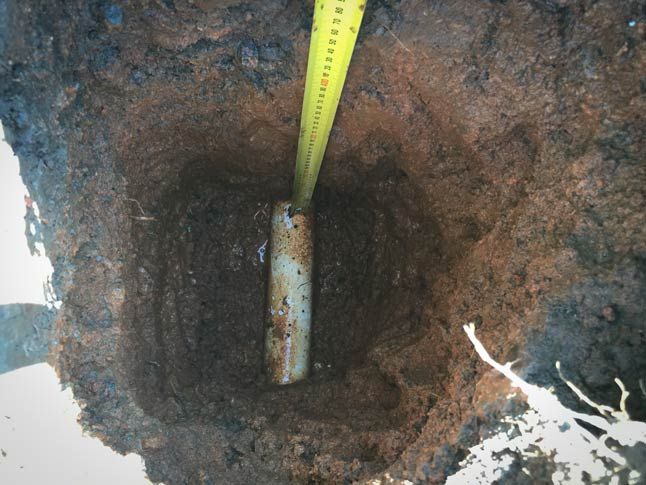
A seller on a few acres outside Buckeye had a cash buyer and a two-week close. Nobody had pumped the tank in years and nobody knew exactly where it was. We located it with a probe, dug down to the lids, pumped it, and ran the inspection the same afternoon. The outlet baffle had rotted off, so we replaced it before writing the report. The buyer got a clean document and the deal closed on time. The field was in good shape, which the seller would not have known without opening the tank.
The Honest Counterpoint: An Inspection Can Cost You the Sale
If your field is failing, the report will say so, and that can change the deal. Some sellers would rather not know. Our advice is the opposite: find out early, before the buyer does, so you control the timing. A failed field means a new field or a new system, which starts with soil testing. Our post on what a septic perc test is in Arizona explains that step. Finding it out at the inspection with a buyer waiting is the worst-case version of the same problem.
Call Phoenix Pro Excavating
A transfer septic inspection is a legal step in selling a home on septic in Arizona, and it goes smoothly when the tank is pumped, located, and accessible ahead of time. Phoenix Pro Excavating has more than ten years in the dirt around Phoenix and the West Valley, with estimates within 24 hours. See our ADEQ septic inspection service, read about septic installation if the report calls for a new system, or visit Phoenix Pro Excavating online. Call 623-299-2172 to schedule.
Frequently Asked Questions
Who is responsible for the septic inspection in Arizona?
The seller is responsible for having the inspection done and giving the report to the buyer. The buyer is responsible for filing the Notice of Transfer after closing. Like any closing item, the details can be negotiated in the contract.
How long is an Arizona septic inspection good for?
It must be completed within the six months before the property transfers. If the sale drags past that window, a new inspection is needed.
What happens if the septic inspection finds problems?
The sale can still go through. The report is disclosure, not a permit. The buyer may ask for repairs, a credit, or a replacement system as a condition of closing.
Contact Phoenix Pro Excavating
Phoenix Pro Excavating
11801 N Tatum Blvd, Suite E
Phoenix, AZ 85028
Phone: 623-299-2172
Stay connected with Phoenix Pro Excavating for excavation tips, project updates, and helpful information for property owners and contractors across the Phoenix area.
Follow Phoenix Pro Excavating Online: