What Is Caliche and Why Is It So Hard to Dig in Arizona?
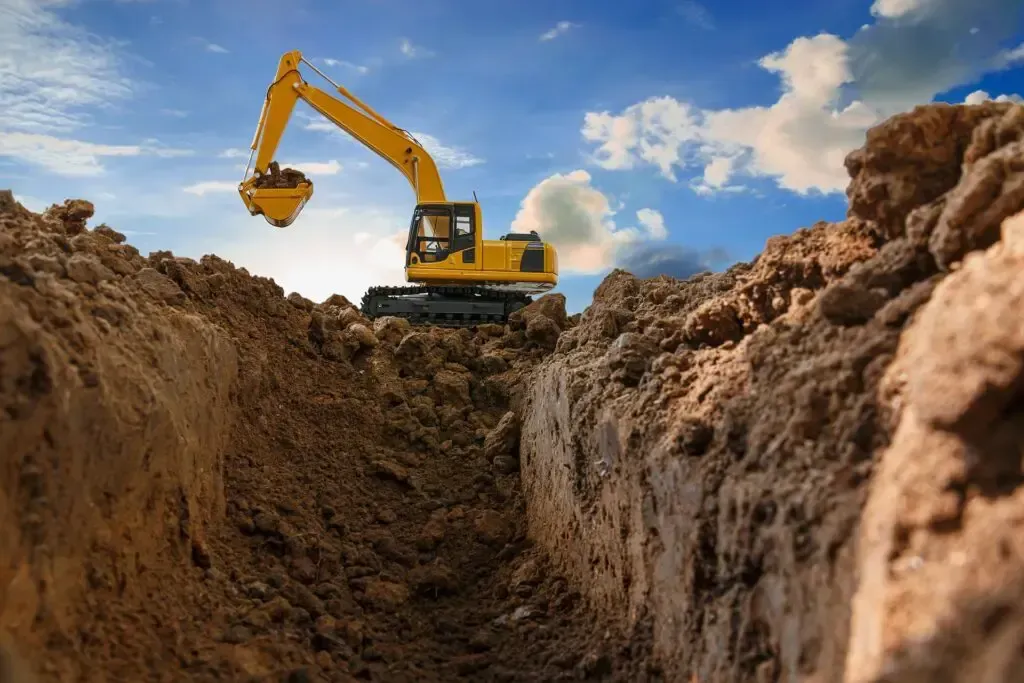
Caliche is a hard layer of desert soil that has been cemented together by calcium carbonate, the same mineral found in limestone. In some spots it is as hard as poured concrete, and it is the number one reason digging projects in Arizona take longer and cost more than folks expect.
I'm the owner of Phoenix Pro Excavating. In more than 10 years of digging around Phoenix and the West Valley, my crew has moved over 150,000 tons of dirt, and caliche has fought us for a good chunk of it. Here's what this stuff is, why it's such a beast, and what we do to get through it.
What Is Caliche, Exactly?
Think of caliche as nature's concrete. Out here in the desert, rain soaks into the ground carrying dissolved calcium. Then the water dries up fast in our heat, and the calcium gets left behind. Over thousands of years, that mineral glues the sand, gravel, and clay together into a solid layer.
Caliche usually shows up as a whitish or chalky-gray band in the soil. Around the Valley, we typically hit it one to four feet down, and the layer can run anywhere from a few inches to several feet thick. Some lots even have two or three layers stacked on top of each other.
Caliche doesn't just slow down pool digs and trenching. It's also one of the biggest reasons two similar lots get very different clearing bids. When that cement-hard layer sits under the brush, pulling stumps turns into rock hammer work, and the price follows. If you're budgeting to clear a lot, here's my full breakdown of how much land clearing costs per acre in Arizona. (adjust link if the published slug differs)
Caliche does not just slow down excavators. It causes drainage headaches too. Rain cannot soak through that cement-like layer, so monsoon storms leave water sitting on the surface and flowing toward the lowest spot in the yard. If that low spot is against your foundation, you have a problem that gets worse every summer. The good news is the ground can be reshaped so water drains away on its own. See our full guide on why yard grading matters for monsoon drainage.
Caliche is often not the last surprise in a foundation dig. On a lot of West Valley lots, the soil under the hardpan is loose, dry silt that collapses when it gets wet, which is why engineers order the ground rebuilt in compacted lifts. Read about that in our guide to over-excavation for Phoenix foundations.
Why Caliche Makes Digging So Hard
Plenty of soil is tough. Caliche is a different animal, and here's why:
• It can be as hard as concrete. A shovel bounces off it, and even a backhoe can struggle.
• It gives no warning. You can dig two feet of soft dirt and then hit a layer that stops you cold.
• It chews up equipment. Bucket teeth wear down fast, and undersized machines take a beating.
• It kills your schedule. A trench that should take two hours can turn into a two-day fight.
• It blocks water. Rain can't soak through it, so water sits on top and causes drainage headaches.
That last one matters more than people think. If your lot has shallow caliche, water can pool during monsoon season and creep toward your foundation. Good site preparation and grading in Phoenix accounts for that from day one.
Nowhere does caliche hit homeowners' wallets harder than pool digs — a hidden shelf at three feet can add days of rock hammering to what looked like an easy excavation. That's exactly why a good pool bid prices the rock contingency upfront instead of springing it mid-dig. See what a dig really runs in our guide to pool excavation cost in Phoenix.
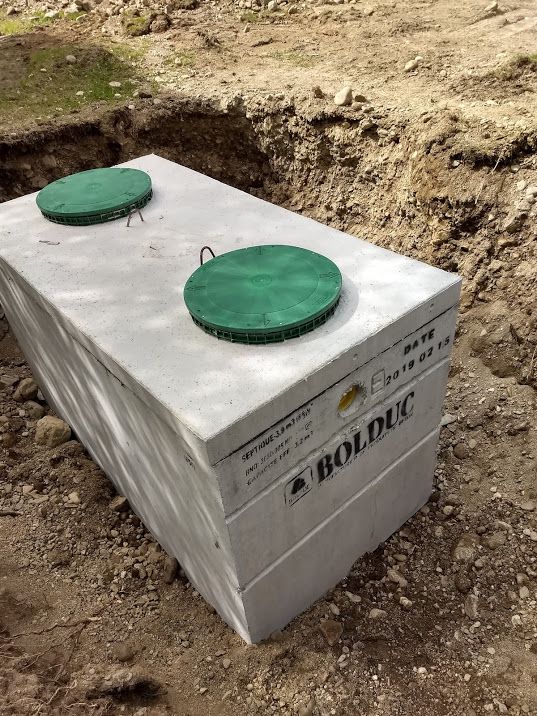
Nowhere does caliche hit homeowners' wallets harder than septic projects, where the tank hole, trenches, and leach field all have to go through whatever is down there. We broke down real-world pricing, including what the dig itself costs, in how much does septic tank installation cost in Arizona.
Caliche does not just slow down digging. It can change how a septic system has to be designed. Learn more in what a septic perc test is in Arizona.
A Real Story: The Garage Pad in Waddell
A while back, a homeowner out in Waddell called me about a pad for a new garage and shop. He'd rented a backhoe over the weekend to save some money. But after two full days, he had a hole about the size of a bathtub. He'd hit a caliche layer about 18 inches down.
We brought out a full-size excavator with a rock hammer. That layer turned out to be nearly two feet thick across most of the pad. We hammered it, ripped it out, hauled off the chunks, and had the pad cut, filled, and compacted in about a day and a half. The lesson: a quick test hole before you commit can save you real money.
How We Break Through Caliche
After a decade of this, we've got a system. We run mini and full-size excavators with rock hammer attachments and ripper teeth. The ripper comes out first, because if we can pop the layer loose without hammering, the job goes faster and your bill stays lower. When the caliche is thick and stubborn, the hammer does the talking.
Near gas, water, or electric lines, hammering is a bad idea. That's where our hydrovac trucks come in, using water and vacuum to expose utilities safely before any heavy digging starts. That combination is a lifesaver on utility trenching jobs and on pool excavation digs. If you've got a trench project coming up, my guide to utility trenching in Phoenix walks through the whole process.
The Honest Truth: Not Every Hard Dig Is Caliche
I'll be straight with you. Some contractors use the word caliche to justify a big bill, and that's not right. Sometimes what feels like caliche is just compacted fill or a pocket of river rock, and a good operator gets through it without any special equipment.
And even when it is caliche, the layer might be thin enough that a ripper pops through it in an hour. If your project is shallow, like drip irrigation lines a foot down, you might never touch it at all. My advice: don't accept worst-case pricing until somebody has actually put a bucket in your ground. If a contractor quotes rock hammer work without digging a test hole first, ask questions.
Nowhere does caliche hit your wallet harder than on a trench job. A utility trench that would cost $10 to $25 per foot in soft soil can jump to $30 to $60 per foot once the rock hammer comes out, because we are breaking through nature's concrete inch by inch. If you are budgeting a water, electrical, or gas line, I laid out the real numbers in my guide to what trenching costs in Arizona.
Ready to Dig Through Caliche? Let's Talk
If your shovel is bouncing off something that feels like a sidewalk, you've probably met Arizona's famous caliche. At Phoenix Pro Excavating, we've spent over 10 years breaking through caliche across Phoenix and the West Valley, and we've got the rock hammers, rippers, and hydrovac trucks to handle the hardest digs. Call me at 623-299-2172 and you'll have an estimate within 24 hours.
Caliche FAQ
How deep is caliche in the Phoenix area?
Most of the time we hit it one to four feet below the surface, but it varies lot by lot. Some yards have it right at the top, and the lot next door might have none at all. A small test dig is the only way to know for sure.
Can I dig through caliche by hand?
If the layer is thin, you can sometimes get through with a digging bar, a pickaxe, and patience. Soaking the spot with water overnight softens it a little. But if the layer is more than a few inches thick, hand digging will wear you out fast, and it's time to bring in a machine.
Does caliche cause drainage problems?
Yes. Water can't soak through caliche, so it sits on top of the layer or runs sideways toward low spots. That's why some yards stay soggy after monsoon storms. Proper grading moves that water away from your home instead of letting it pool against the foundation.
Need a dig? Call For a quote today
623-299-2172